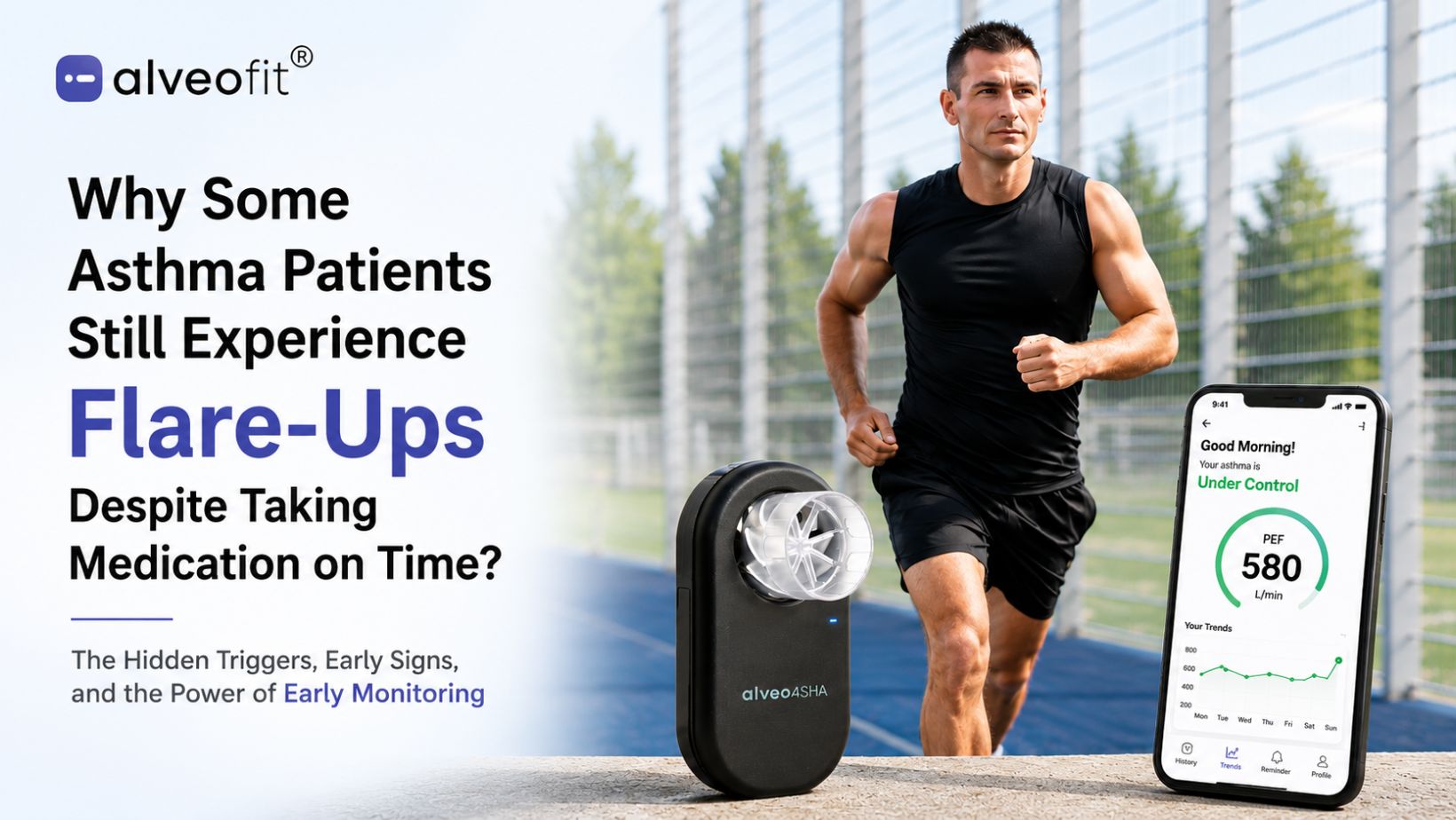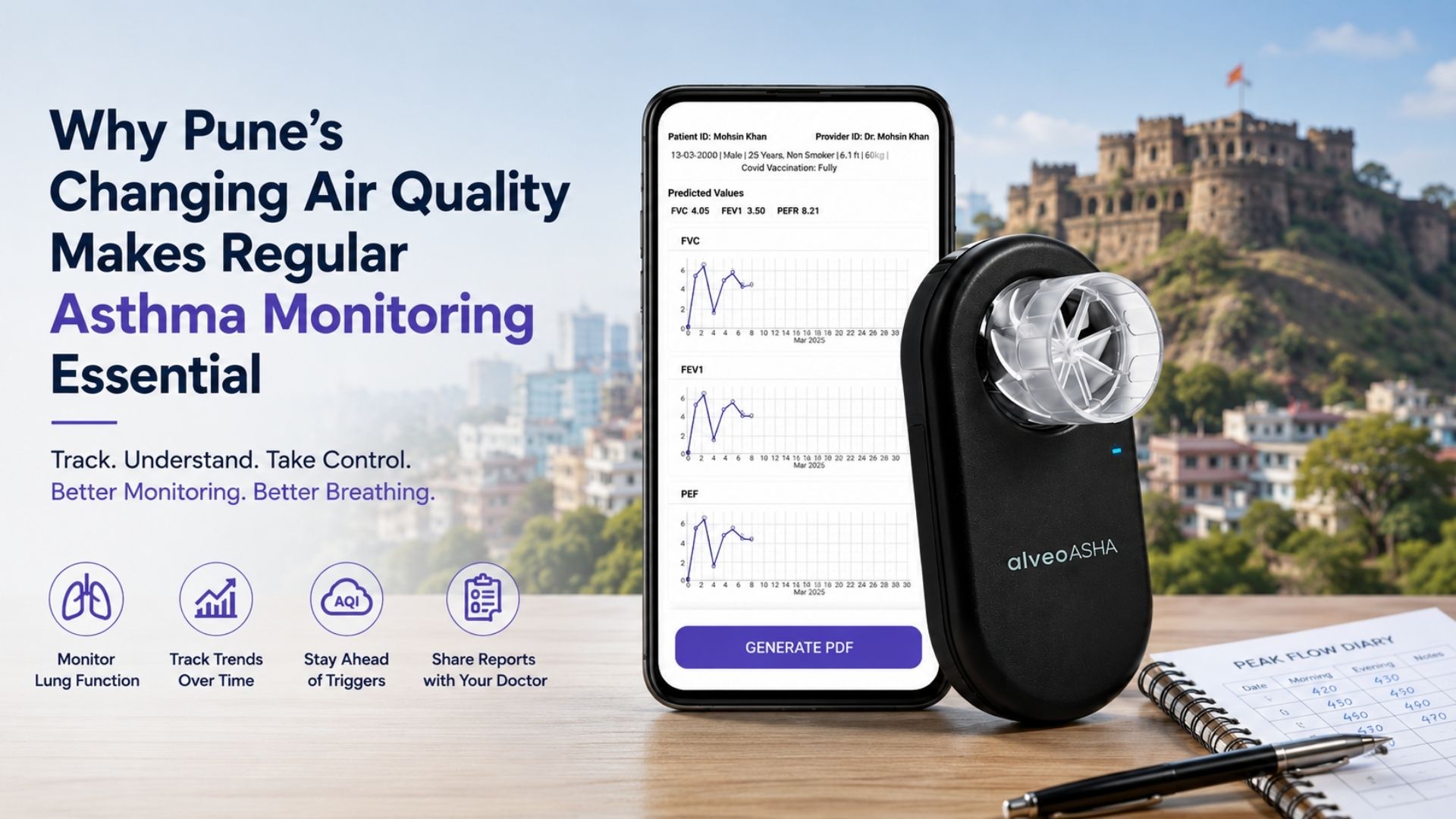
Does your asthma feel well-controlled for weeks and then suddenly flares after a stretch of heavy traffic, dusty winds, or a shift in season? You're not imagining it. Pune's air quality and weather change substantially throughout the year, and for many people with asthma, so does their lung function.
Pune's annual average air quality has actually been trending worse, not better! In fact, independent monitoring shows the city's average AQI rose from around 63 in 2020 to roughly 118–135 in recent years. That’s a jump of over 40% in five years.
During winter months in particular, PM2.5 levels regularly climb into the "poor" to "very poor" range. That’s a level at which health monitors flag a moderate to high risk of asthma symptoms, including wheezing, chest tightness, and persistent cough. That's the backdrop for why simply symptom watching is not enough. Today, lung function monitoring matters more in Pune than in cities with steadier air quality.
Pune's Three Seasons, Three Different Asthma Triggers
Asthma isn't a fixed condition that behaves the same way year-round. In Pune, each season introduces a distinct set of triggers.
Summer (March–June):
Hot, dry conditions combine with dust from construction and unpaved roads and elevated ground-level ozone. This is a common trigger period for outdoor-activity-related coughing and breathlessness.
Monsoon (June–September):
Rainfall knocks down airborne dust, which helps. However, the humidity that follows encourages mould, dust mites, and fungal spores indoors, and respiratory infections tend to rise during this window. Indoor triggers replace outdoor ones; they don't disappear.
Winter (November–February):
This is typically Pune's highest-risk season. Cooler air and calmer wind patterns trap fine particulate matter closer to the ground for longer. Moreover, cold air itself can irritate airways independent of pollution levels. In fact, recent monitoring data has repeatedly placed Pune's winter AQI in the "poor" range (100–200+). That’s a level where respiratory symptoms become measurably more likely.
The important thing to remember is that your asthma doesn't respond to every season in the same way. Whether you're taking your medication correctly or not is not the only thing impacting your condition. Your control over your asthma at any given moment reflects a mix of season, recent air quality, and your airway sensitivity.
As Pune's environment changes, so can your respiratory health. Understanding these patterns is the first step towards managing them more effectively.
Why Symptoms Alone Aren't a Reliable Warning System
Here's the counterintuitive part!
Air pollution can inflame and narrow your airways before you notice symptoms.
Two days with the same AQI readings can produce very different reactions depending on
- Your recent exposure history
- How well-controlled your asthma already is
- Other environmental factors that day
This is precisely why waiting for coughing or breathlessness to "tell you" something is wrong is a lagging indicator, not a leading one. By the time symptoms are obvious, airway inflammation may already be underway.
Objective lung function monitoring and tracking your peak expiratory flow (PEF) at home closes that gap. Use of an asthma monitoring device in Pune gives you a number, not just a feeling, and those numbers trend earlier than symptoms do.
What Regular Monitoring Actually Tells You
You can't control Pune's weather or air quality, but you can monitor how your lungs respond to them. That's exactly why regular monitoring should become an important part of your asthma management routine.
An asthma monitoring device in Pune helps you identify changes in your lung function before they become obvious through symptoms alone. You no longer have to rely on or wait to experience persistent coughing, wheezing, or breathlessness.
Instead, you can recognise early warning signs via a respiratory monitoring device in Pune. Then, you can discuss them with your doctor before your asthma becomes harder to control. Regular monitoring can also help you:
- See seasonal patterns specific to your own lungs, not general population data
- Identify personal triggers; you may find your numbers dip after specific exposures (traffic-heavy commutes, particular weeks of monsoon, etc.)
- Evaluate your treatment plan objectively: is your current inhaler/medication regimen actually keeping your PEF stable, or just masking symptoms?
- Catch gradual decline early: While it's still a conversation with your doctor rather than an emergency room visit
When to Monitor More Closely
While regular monitoring is beneficial throughout the year, there are certain situations where tracking your lung function becomes even more important. Paying closer attention during these periods can help you detect changes early and take timely action.
Daily monitoring is good baseline practice, but certain windows call for extra attention:
- Air quality index in your area is elevated (check CPCB or SAFAR readings for Pune)
- Seasonal transitions — especially the monsoon-to-winter shift, historically Pune's steepest decline period
- Within 2–4 weeks of any flare-up, as airways can remain hyperreactive after an attack resolves
- Any time your doctor changes your medication or dosage
- While recovering from a respiratory infection (common during monsoon)
- If symptom frequency or severity has crept up recently
Bring the trend data, not just "I've been coughing more," to your next doctor's visit. Objective readings change the quality of that conversation.
What to Look for in a Peak Flow / Asthma Monitoring Device
Not every monitoring device offers the same experience. The right digital asthma monitoring device should make it easy to monitor your breathing consistently. It should also make it easier to understand your results and share them with your healthcare provider when needed.
Before choosing one, it's worth comparing options against a few criteria:
| Criteria | Why it matters |
| Accuracy & calibration | Look for devices validated against clinical spirometry standards, not just consumer claims |
| Ease of daily use | A device you'll actually use every day beats a more "advanced" one that's cumbersome |
| Trend tracking | Single readings are far less useful than a device/app that shows your pattern over weeks and months |
| Shareability with your doctor | Exportable reports or easy screen-sharing saves time in consultations |
| Digital vs. mechanical | Digital meters typically reduce reading errors and auto-log history; mechanical ones are cheaper but rely on manual tracking |
This is worth evaluating regardless of which brand you land on! Remember, the right asthma monitoring device in Pune is the one you'll actually use consistently. But choosing one with accurate data is similarly crucial because it ensures you can act on!
A note on alveofit
One option that fits these criteria is the alveoASHA Digital Peak Flow Meter, which automates trend tracking and generates shareable reports for doctor visits. It's one of several digital options available in India worth comparing against your specific needs (daily-use simplicity, app integration, cost) before deciding.
This article is for general educational purposes and isn't a substitute for personalized medical advice. If you're experiencing worsening asthma symptoms, consult a pulmonologist.
FAQs
How often should I use an asthma monitoring device?
Many healthcare providers recommend checking your lung function daily or as advised, especially during seasonal changes or periods of poor air quality.
Can air pollution trigger asthma attacks in Pune?
Yes. Poor air quality, dust, vehicle emissions, and seasonal pollution can irritate the airways and increase the risk of asthma symptoms.
What is the best way to monitor asthma at home?
Using a clinically validated digital peak flow meter and tracking your readings regularly helps identify changes in lung function before symptoms become severe.