Setting up or upgrading a respiratory diagnostic desk comes with a lot of critical decisions, but one question usually sits right at the top of the list:
“Which equipment do I actually need, and how much is it going to cost?”
A quick search for a pulmonary testing device can bring up everything from pocket-sized spirometers to advanced FOT systems and complete pulmonary laboratories. The challenge is knowing which of these options actually matches your clinic’s testing needs. That’s exactly what we answer here.
This guide breaks down what a pulmonary function test machine can measure, the price ranges you can expect in India, and how to choose the right setup for your clinical needs.
What Is a Pulmonary Function Test Machine?
A Pulmonary Testing Device is a medical device used to assess different aspects of lung and respiratory function. The tests and measurements it provides depend on the technology used in the machine.
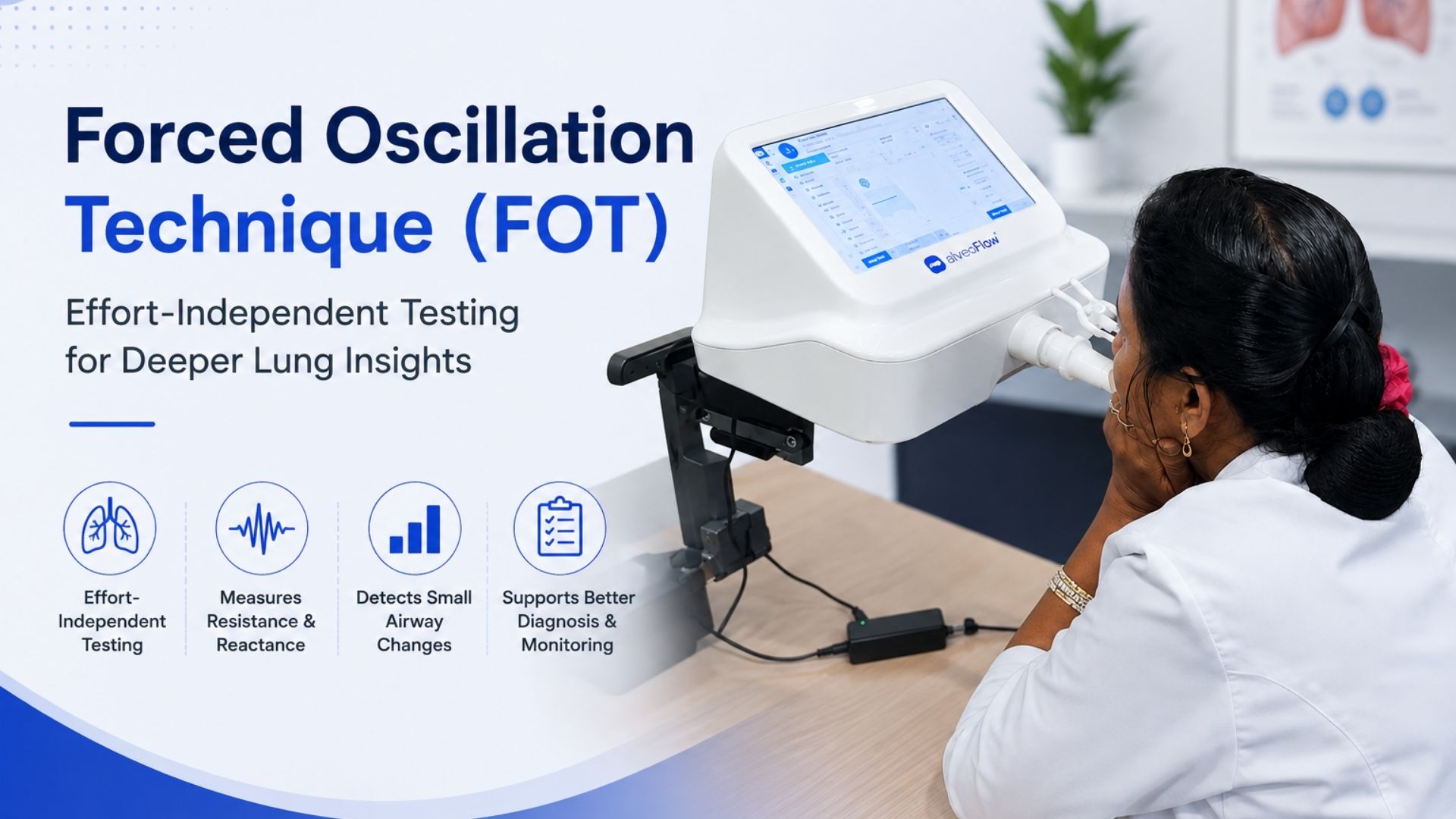
For example, a spirometer measures airflow and lung volumes, while an FOT system measures respiratory mechanics during normal breathing. More advanced pulmonary function systems can also measure lung volumes and how effectively gases move from the lungs into the blood.
This means a pulmonary testing device can refer to different types of equipment, depending on the level of respiratory assessment required. A clinic may use a spirometer for routine airflow testing, while a specialised respiratory clinic may need FOT or a more comprehensive pulmonary function system for additional measurements.
The important point is that there is no single type of pulmonary function test machine for every clinical need. The right technology depends on what clinicians need to measure and which patients they are assessing.
What Can a Pulmonary Testing Device Measure?
A Pulmonary Testing Device can measure different aspects of respiratory function depending on the technology it uses.
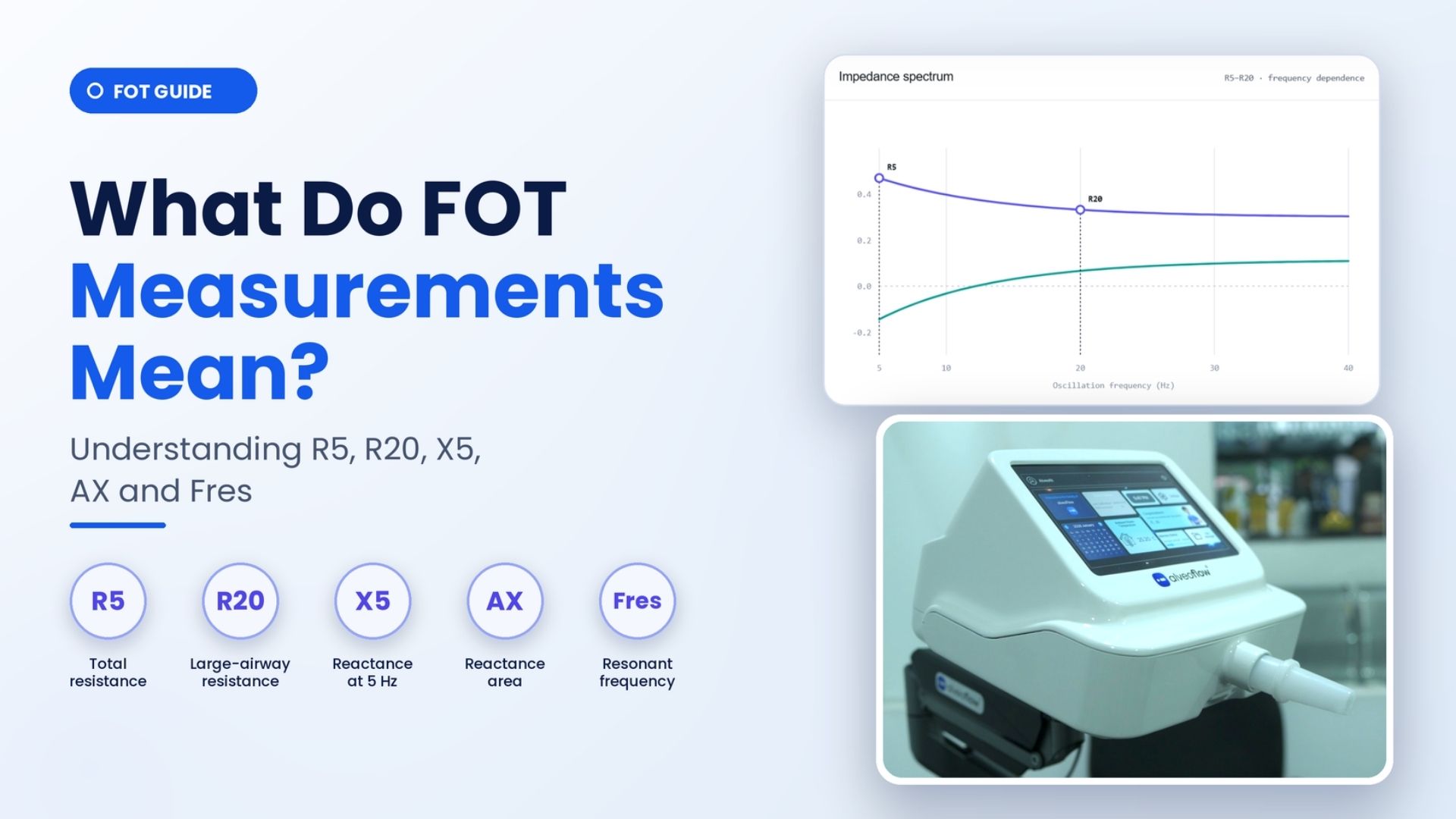
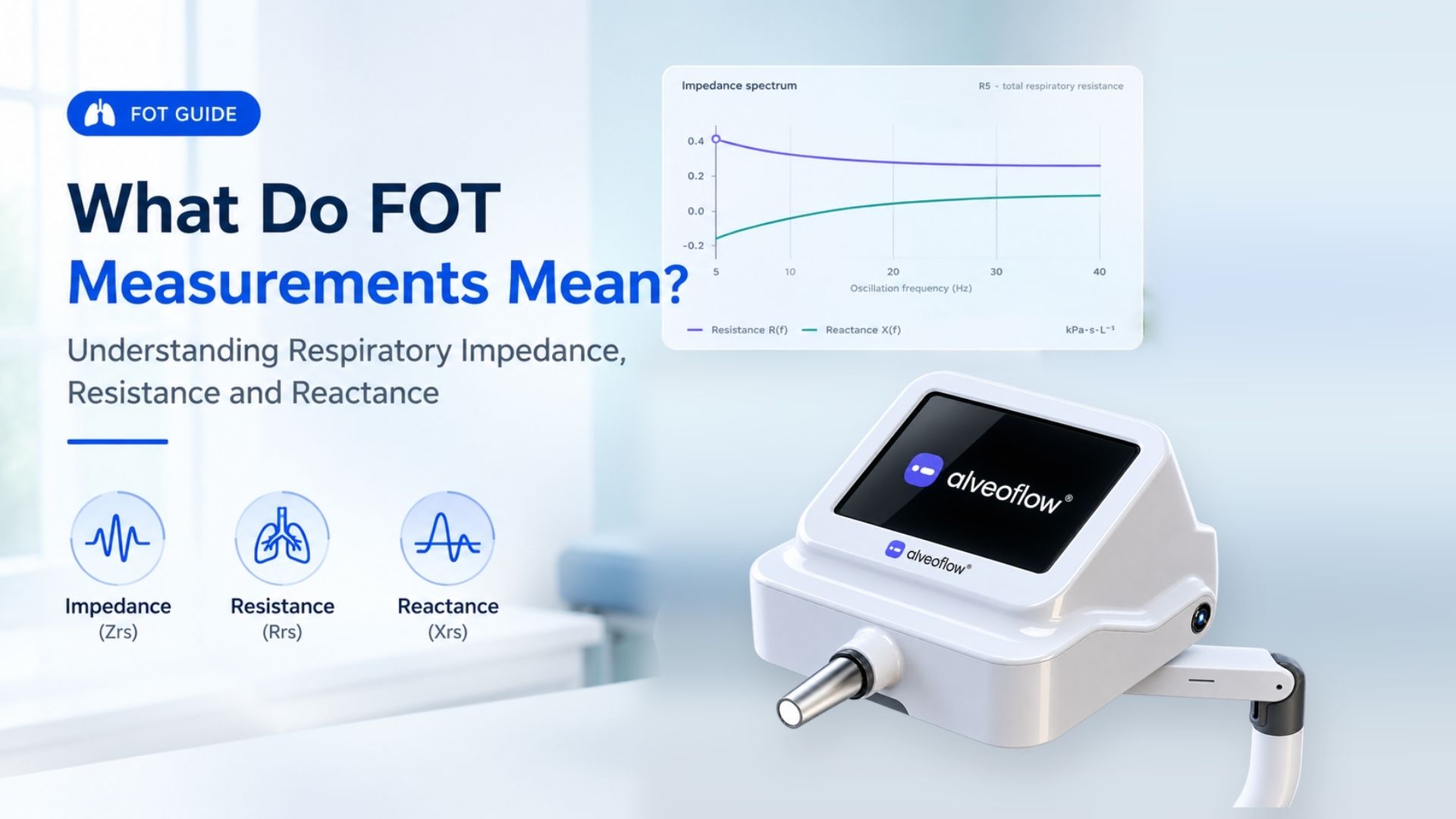
A spirometer measures airflow and lung volumes during forced breathing, while FOT measures respiratory resistance, reactance, and impedance during normal breathing. More comprehensive PFT systems can also measure lung volumes and gas transfer through tests such as body plethysmography and DLCO.
| Measurement | What It Helps Assess |
| FEV1 | Air expelled during the first second of forced expiration |
| FVC | Total air expelled during a forced breath |
| FEV1/FVC | Relationship between forced airflow and lung volume |
| Lung volumes | Measures such as TLC, FRC and RV that describe the amount of air the lungs can hold |
| DLCO | How well gases move from patient’s lungs into the bloodstream |
| Resistance | Opposition to airflow through the respiratory system |
| Reactance | Elastic and inertive properties of the respiratory system |
| Impedance | Overall respiratory response measured through oscillometry |
What Is the Difference Between Clinic PFT and Complete PFT Testing?
The main difference is the range of testing the facility needs to provide. A clinic PFT setup can cover routine respiratory assessment with a spirometer and, where needed, FOT. A complete PFT setup adds specialised testing for lung volumes and gas transfer.
| PFT Setup | Typical Equipment | What It Can Cover | Best Suited For |
| Clinic PFT | Digital spirometer, with FOT where required | Routine airflow assessment and additional respiratory mechanics | Clinics, OPDs and practices handling routine respiratory testing |
| Complete PFT | Spirometry, body plethysmography or gas dilution, DLCO system | Airflow, lung volumes and gas transfer | Pulmonary laboratories and hospitals requiring comprehensive assessment |
A clinic does not necessarily need a complete pulmonary laboratory to perform useful lung function testing. The right setup depends on the tests clinicians need to offer, the patients they regularly assess, and the level of respiratory evaluation required.
This also means a higher-priced PFT machine is not automatically the better choice. The equipment should match the clinical needs of the facility.
Pulmonary Function Test Machine Price in India
The pulmonary function test machine price in India can vary a lot depending on the technology, measurements, hardware configuration, and software included. A basic spirometer and a complete pulmonary function system serve very different clinical needs, so their prices can differ substantially.
As an indicative guide, Indian clinics may encounter the following price ranges.
| Clinic Need | Device Type | Indicative Price Range | Best Suited For |
| Basic screening | Portable or pocket spirometer | ₹15,000–₹35,000 | OPDs, general practice and screening |
| Diagnostic spirometry | PC-based or desktop spirometer | ₹50,000–₹1,50,000 | Respiratory clinics and diagnostic desks |
| Effort-independent testing | FOT or oscillometry system | ₹5,00,000–₹10,00,000+ | Pulmonology and paediatric respiratory assessment |
| Complete laboratory assessment | Body plethysmography/DLCO system | ₹15,00,000–₹35,00,000+ | Tertiary hospitals and advanced pulmonary laboratories |
These figures are indicative ranges, not fixed market prices. The final Pulmonary function test machine price can vary based on the manufacturer, configuration, software, accessories, warranty, and included services.
What Adds to the Total Cost of Pulmonary Function Testing Equipment?
The pulmonary function test machine price is only one part of the investment. Clinics should also consider the Total Cost of Ownership (TCO), which covers the costs of using and maintaining the equipment over time. Depending on the device, these costs may include:
- Bacterial and viral filters
- Disposable mouthpieces
- Calibration equipment
- Software renewals or upgrades
- Annual Maintenance Contracts (AMC)
- Comprehensive Maintenance Contracts (CMC)
- Servicing and replacement parts
Consumable costs can also vary based on the device and infection-control setup. Therefore, clinics should ask about the expected cost per test and annual maintenance cost, rather than comparing equipment only by its purchase price.
What Should You Check Before Buying a Pulmonary Testing Device?
The right pulmonary testing device should match the tests your clinic needs, the patients you assess, and the workflow you want to support. Price matters, but accuracy, maintenance, infection control, and reporting capabilities also deserve attention.
| What to Check | Why It Matters |
| Testing capability | Confirm whether the device supports spirometry, FOT, or other PFT measurements your clinic requires. |
| Calibration and quality control | Check how the system is calibrated and whether it follows applicable ATS/ERS technical standards. |
| Infection control | Understand the requirements for filters, mouthpieces, cleaning, and reusable components. |
| Software and reporting | Check whether the system provides digital reports, data storage, and the connectivity your workflow requires. |
| Regulatory compliance | Verify the manufacturer's applicable Indian regulatory requirements and relevant quality certifications. |
| Portability and setup | Consider whether a handheld, desktop, or cart-based system fits your clinical environment. |
Which Pulmonary Testing System Fits Your Clinic?
The right Pulmonary Testing Device setup depends on the patients you see and the type of respiratory assessment your clinic needs to provide.
| Practice Type | Typical Need | Suitable Setup |
| General practice | Basic respiratory screening | Portable digital spirometer |
| Paediatric clinic | Testing children who struggle with forced breathing | FOT or oscillometry system |
| Pulmonology clinic | Airflow and respiratory mechanics | Spirometry + FOT |
| Screening or occupational setup | Portable, high-volume testing | Handheld spirometer |
| Advanced pulmonary laboratory | Comprehensive lung function assessment | Spirometry + lung volumes + DLCO |
Choose the Pulmonary Testing Device That Fits Your Clinic
Choosing a pulmonary function test machine is not simply about finding the most advanced or expensive option. The right setup should match your clinic’s patients, testing needs, workflow, and budget.
alveofit offers solutions across different respiratory testing needs, from alveoASHA for digital peak flow monitoring to alveoair digital spirometry and alveoFlow effort-independent FOT. Together, our solutions give clinicians more flexibility in assessing and monitoring respiratory health.
Are you looking for the right respiratory testing setup for your clinic? Explore alveofit’s solutions or request a demo to find the right fit for your needs.