Have you recently started tracking your peak flow readings and wondered how long you should continue before discussing them with your doctor?
It's a common question, especially if you're unsure whether you've recorded enough information to make those readings meaningful. The truth is, your doctor needs more than just a few numbers. They need a complete picture of your asthma control.
In this guide, we'll explain how long you should track your peak flow meter chart. We also discuss what it should include and when it's the right time to schedule a discussion with your doctor.
How Long Should You Track Your Peak Flow Meter Chart?
In most cases, doctors recommend tracking your peak flow readings twice a day for about two to three weeks when your asthma is well controlled. This helps establish your personal best, which becomes the baseline for interpreting future readings and building an effective asthma peak flow chart.
However, there isn't one fixed timeline for everyone. The ideal duration to track your asthma flow meter chart depends on why you're monitoring your breathing. For example:
- If you're establishing your personal best, consistent monitoring for two to three weeks is usually recommended.
- If you've recently started or changed asthma medication, your doctor may ask you to continue tracking until they can assess your response.
- If you're recovering from an asthma flare-up, monitoring may continue until your readings stabilise.
The goal isn't simply to collect readings. It's to build a chart that tells a meaningful story about your lung function.
Why Your Doctor Needs More Than a Few Readings
A single peak flow reading only reflects how your lungs are functioning at that particular moment. It doesn't show whether your asthma is improving, worsening, or remaining stable.
This is why doctors look for trends instead of individual numbers. In fact, a well-maintained peak flow meter chart can:
- Reveal gradual changes in airflow
- Identify early signs of worsening asthma
- Show how well your current treatment plan is working
The more consistent your recordings are, the easier it becomes for your doctor to make informed treatment decisions.
What Should Your Peak Flow Meter Chart Include?
Your asthma flow meter chart should include more than just your daily readings. It should also capture the information that may have influenced those readings. When done right, this can help your doctor interpret the results accurately. These details also provide a clearer picture of your asthma control and help support better treatment decisions.
Along with your readings, try to record:
- Morning and evening peak flow readings.
- Your current symptoms, if any.
- Asthma medication taken that day.
- Exposure to known triggers such as dust, pollen, smoke, or exercise.
- Your personal best peak flow value.
Together, this information makes your asthma peak flow chart more meaningful and helps your doctor make better-informed treatment decisions.
When Should You Discuss Your Peak Flow Chart with Your Doctor?
Are you planning to wait until your next routine appointment to discuss your peak flow meter chart? That may not always be the best approach.
Your doctor may need to review your chart much sooner depending on your readings and symptoms. It's a good idea to discuss your chart with your doctor if:
- You've completed two to three weeks of monitoring to establish your personal best.
- Your doctor has recently adjusted your medication.
- Your readings remain consistently lower than expected.
- Your symptoms are becoming more frequent or severe.
- You're recovering from an asthma flare-up.
- Seasonal changes or new triggers are affecting your breathing.
Bringing a complete chart helps your doctor identify patterns and make more informed treatment decisions.
Don't Wait If You Notice These Warning Signs
Regular monitoring of symptoms is important. However, some situations require immediate medical advice rather than continued observation. Hence, you must contact your doctor immediately if:
- Your readings repeatedly fall into the Yellow Zone despite following your asthma action plan.
- Your readings enter the Red Zone.
- Your peak flow values decline rapidly over a short period.
- You're experiencing increasing breathlessness or wheezing.
- Your reliever medication is no longer providing the usual relief.
Early intervention can often prevent a minor decline from developing into a serious asthma attack.
Conclusion
There isn't a fixed number of days you should track your asthma flow meter chart before discussing it with your doctor. Instead, continue monitoring until your chart provides enough consistent information to establish your personal best, identify patterns, and support meaningful clinical decisions. A complete chart always offers more value than a few isolated readings.
Have you not started tracking your peak flow readings yet? Now is the perfect time to begin. The sooner you start building a complete peak flow meter chart, the sooner your doctor can identify meaningful patterns and make informed decisions about your asthma management.
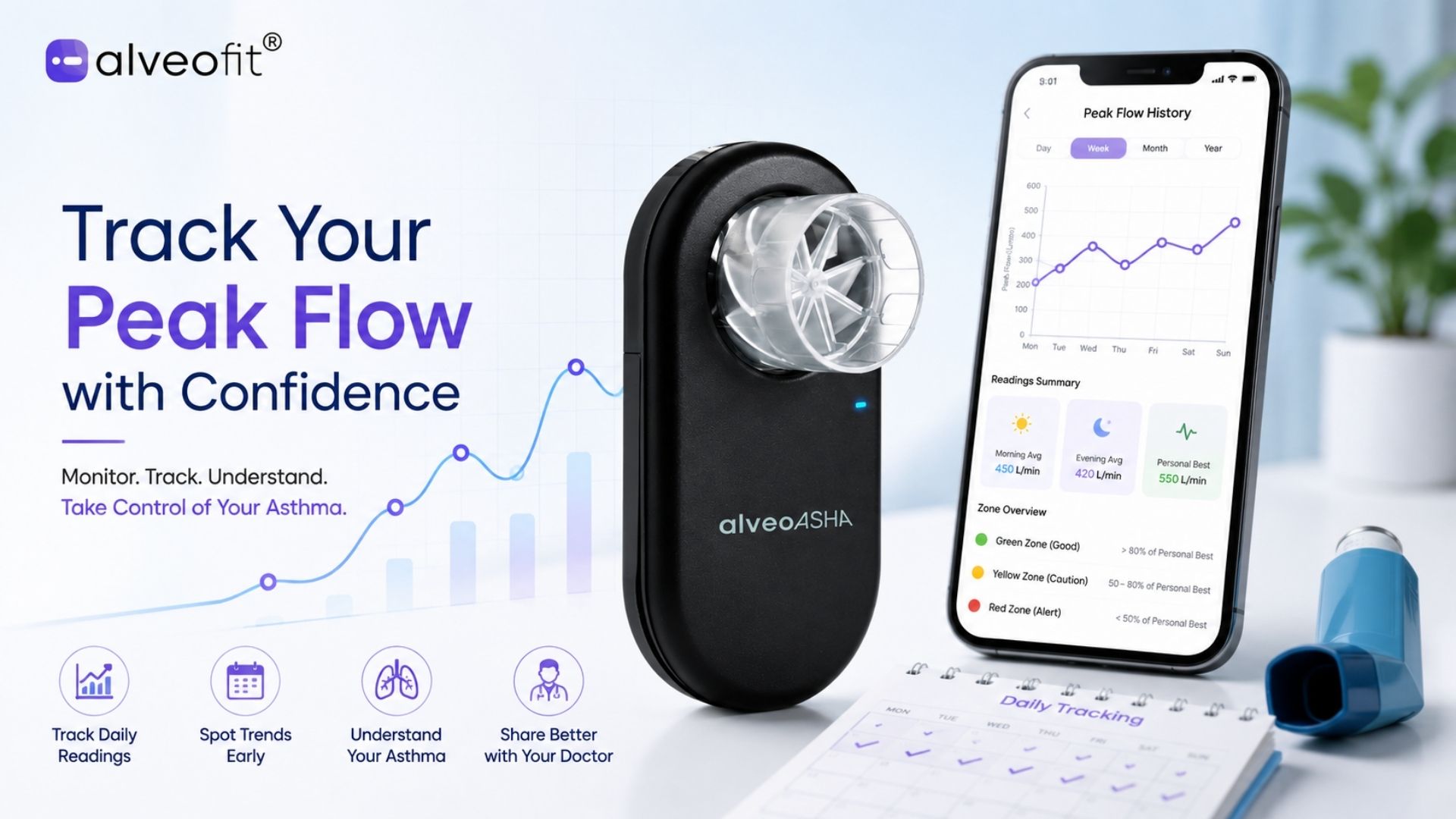
If you're planning to buy a peak flow meter in India, choose one that makes daily monitoring simple and consistent. The alveoASHA helps you record accurate readings and track changes over time. Our Digital Peak Flow Meter makes it easier to share meaningful data with your doctor because better asthma management starts with better monitoring.
FAQs
How many days should I track my peak flow readings?
Most people should record peak flow readings twice daily for two to three weeks to establish their personal best. Your doctor may recommend longer monitoring depending on your asthma control.
Should I record peak flow readings every day?
Yes. Daily morning and evening readings provide more reliable trend data than occasional measurements.
Can I show my peak flow chart on my phone?
Yes. Digital peak flow meters and companion apps allow you to store and share readings with your healthcare provider.
What is a normal peak flow reading?
Normal values vary depending on age, height, and sex. Your doctor uses your personal best rather than comparing you with others.