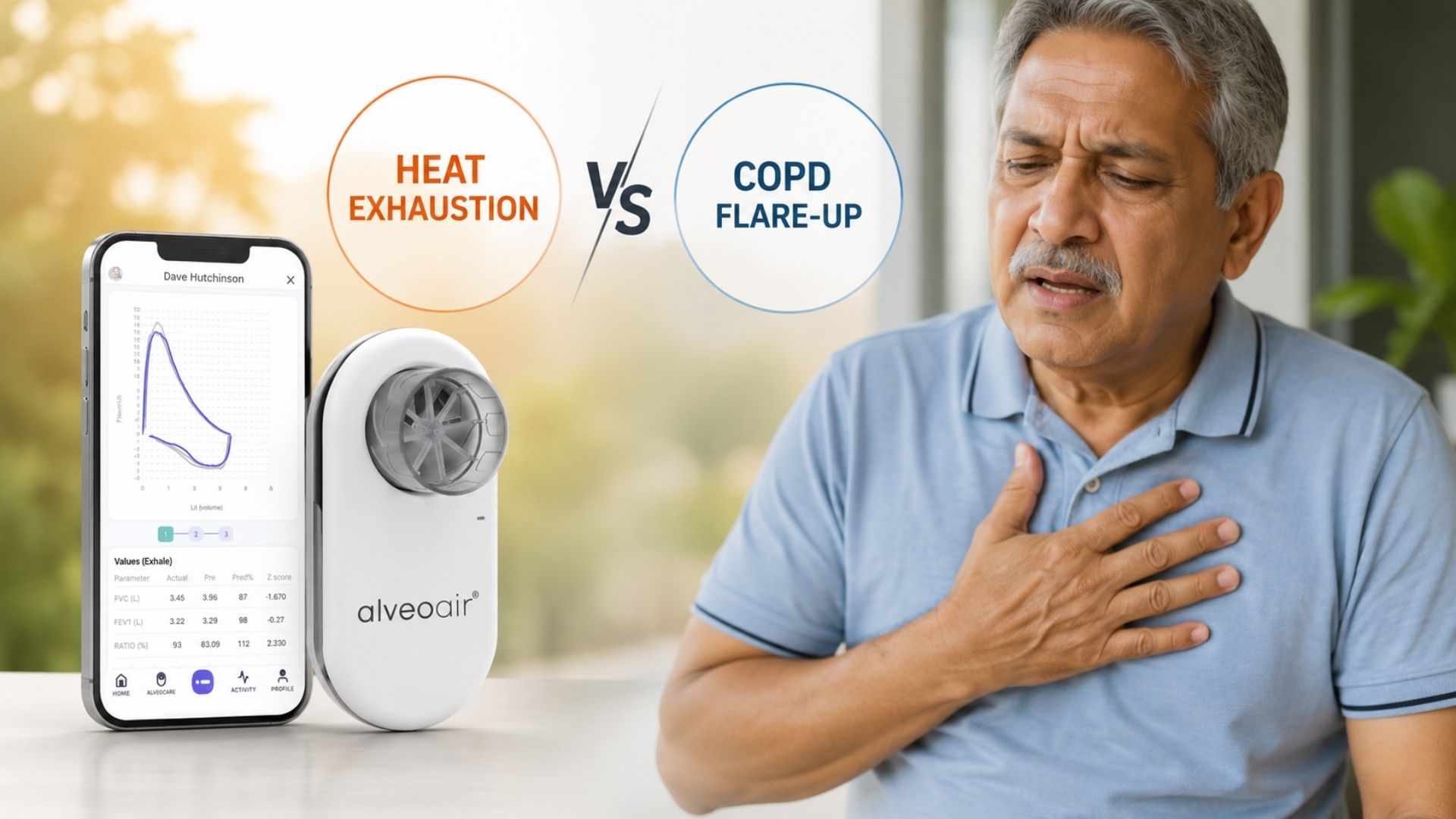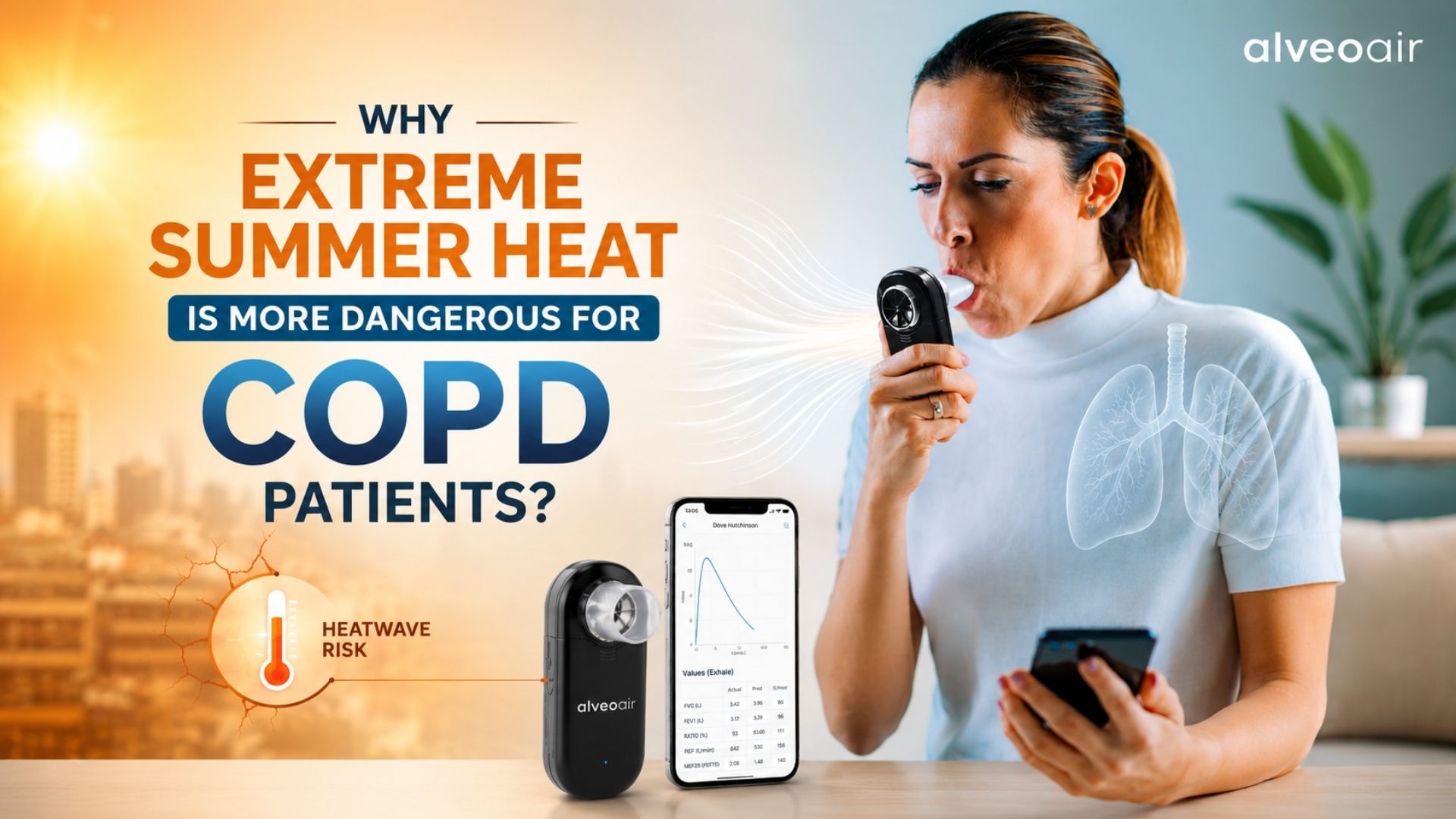
India’s summers are becoming increasingly intense, with several regions experiencing longer heatwaves and dangerously high temperatures each year. Extreme heat can affect almost anyone. However, people living with chronic respiratory diseases often face far greater health risks during these months.
India’s summers have become increasingly difficult for people with respiratory diseases. Rising temperatures and prolonged heatwaves can place continuous stress on the body, especially for individuals living with COPD. Healthy lungs may still be able to adjust to hotter conditions more efficiently. However, COPD patients often experience far greater breathing discomfort during extreme summer heat.
But why does summer heat affect people living with COPD so severely? Let us understand how extreme summer heat can affect COPD patients and why early symptom monitoring through spirometer test at home becomes important during Indian heatwaves.
1. Increased Breathing Effort During Extreme Heat
Breathing often starts feeling more exhausting during extremely hot summer days because the body naturally works harder to cool itself as temperatures rise. This means your breathing rate and heart rate may increase continuously throughout the day to regulate internal temperature.
Healthy lungs are usually able to adjust to this added workload more efficiently. However, restricted airflow can make the extra breathing effort physically exhausting for COPD patients. Their respiratory system already struggles to deliver oxygen properly. So, even a mild exertion due to prolonged heat may feel more uncomfortable than usual for People living with COPD.
Over time, this continuous strain on their lungs may contribute to:
- Faster Breathing
- Increased Breathlessness
- Reduced Physical Stamina
- Faster Exhaustion During Daily Activities
Since these changes often develop gradually during heatwaves, many patients may initially overlook them as normal summer tiredness. This is one reason why some individuals use a spirometer test at home to monitor whether prolonged heat exposure is beginning to affect their breathing performance. But remember, breathing effort is not the only problem severe heat creates for COPD patients.
2. Higher Oxygen Demand Can Increase Respiratory Stress
Extreme summer heat can increase the amount of oxygen the body requires throughout the day. This happens because the body requires and uses more energy when the temperature rises continuously. This energy is needed to maintain a stable internal temperature and support normal physical functioning.
This increased oxygen demand can become difficult for COPD patients to manage because compromised lungs may already struggle to deliver oxygen efficiently. As a result, the body may begin feeling physically drained much faster during prolonged heat exposure. Many people living with COPD may begin experiencing:
- Physical Weakness
- Faster Fatigue
- Reduced Energy Levels
- Slower Recovery After Physical Activity
These symptoms may become more noticeable during continuous heatwaves when the body remains under constant respiratory stress for several days. This is one reason why some individuals use a home spirometer for COPD patients to monitor breathing changes during periods of extreme summer heat.
3. Hot Air Can Irritate Sensitive Airways
COPD patients’ airways are already chronically inflamed and highly sensitive to environmental conditions. But continuous exposure to extremely hot air during severe summer heat may further irritate these airways. That could make breathing feel increasingly uncomfortable over time.
Many patients even notice that breathing outdoors during peak afternoon hours starts feeling unusually harsh on the lungs. This happens because the hot air may create a dry, tight, or burning sensation inside the chest and throat. Such instances are especially common during prolonged heat exposure.
People living with COPD may begin experiencing the following as airway irritation gradually increases:
- Coughing
- Wheezing
- Chest Tightness
- Throat Irritation
- Temporary Breathing Difficulty
In some cases, prolonged exposure to hot environmental conditions may also increase airway sensitivity and make airflow feel more restricted than usual. These breathing changes often worsen gradually during heatwaves. Hence, many patients may not recognize the severity of the problem until symptoms become more serious.
This is why some individuals use a Bluetooth spirometer to observe whether continuous heat exposure is affecting their lung performance over time.
4. Respiratory Fatigue Can Build Up Quietly During Summer
Continuous respiratory strain during extreme summer heat can gradually drain physical energy levels in COPD patients. This happens because the lungs and respiratory muscles continue working harder throughout prolonged heat exposure. Hence, their body may slowly begin feeling physically exhausted even without excessive activity.
But the problem is that respiratory fatigue often develops quietly over several days of heat exposure. As a result, many patients may initially mistake these changes for normal summer tiredness rather than increasing respiratory stress. But people living with COPD should not ignore changes like:
- Physical Exhaustion
- Lower Activity Tolerance
- Daytime Weakness
- Reduced Physical Stamina
These symptoms usually worsen gradually, so they can sometimes go unnoticed until breathing discomfort becomes more serious. Using a spirometer test at home may, however, prove useful. It can help patients recognize the toll heat exposure is beginning to have on their lung performance and overall respiratory function.
But A Spirometer Can Help COPD Patients During Extreme Summer Heat
Extreme summer heat can quietly worsen breathing discomfort in COPD patients. This is why regular lung monitoring becomes important during heatwaves. A spirometer test at home can help patients identify breathing changes before symptoms become severe.
Here are some ways a spirometer can help during Indian summers:
- A spirometer test at home can help identify early breathing changes before symptoms become severe.
- Monitoring airflow regularly may help understand if heat exposure is affecting the lung performance of COPD patients.
- Tracking breathing patterns regularly may help patients understand how heatwaves are affecting their lung performance over time.
- Daily readings from a Bluetooth spirometer can help patients recognize worsening respiratory strain earlier and seek timely medical attention.
- Long-term symptom monitoring can also help individuals recognize gradual breathing changes during periods of extreme summer heat.
Conclusion
Extreme summer heat in India can quietly put continuous stress on people living with COPD. What often begins as mild tiredness, breathing discomfort, or physical exhaustion during heatwaves may gradually develop into more serious respiratory problems over time.
This is why COPD patients should never ignore changes in breathing patterns during severe summers. Increased breathing effort, higher oxygen demand, airway irritation, and respiratory fatigue can all worsen lung discomfort, especially during prolonged heat exposure. Early symptom monitoring can, however, make a significant difference during such situations.
Using a spirometer test at home may help COPD patients in India to recognize breathing changes before symptoms become severe. Regular monitoring through Bluetooth spirometers like alveoair can also support better awareness of how extreme summer conditions are affecting lung performance.
So, why not invest in long-term health management by buying alveoair from alveofit today? We help COPD patients take more proactive steps through our lung monitoring devices. Ensure you are protected during Indian heatwaves by making the shift today.